
Why Brand Archetypes Still
Matter in a Changing World
A look behind the curtain at one of a brand’s most influential assets: its brand archetype. This guide explores what archetypes are, how marketers use them, and why they’re more important than ever.

Jackie Bebenroth
Founder and Chief Brand Advisor of Muse.
She works alongside leading brands and executives to develop strategic positioning and messaging strategies that set the stage for long-term success.
Imagine meeting someone for the first time and, within seconds, feeling like you’ve known them for years. There’s something about their energy that’s familiar, magnetic, comfortable. That’s the magic of brand archetypes.
In a business landscape where attention is scarce and sameness is everywhere, archetypes offer an edge that’s anything but superficial. They’re not just a clever marketing trick or a creative label slapped onto a brand. When used correctly, brand archetypes are a strategic asset. One that gives shape to your story, consistency to your voice, and cohesion to every touchpoint you own.

Ghia, above, consistently embodies its Outlaw archetype for a consistent brand world across digital, retail, and physical touchpoints. Even their copywriting exudes bold, mold-breaking confidence.
Archetypes are used by some of the most sophisticated marketing leaders in the world to guide billion-dollar brand architectures. They’ve been trusted frameworks for years, and marketers are investing in them now more than ever, because in an AI-saturated world, authenticity is currency. Brand archetypes provide a framework to maintain emotional resonance, even when your content is automated, your CX is AI-driven, and your audience sees your brand more online than in real life.
This page is your definitive, modern guide to brand archetypes: what they are, how they work, and why they should be sitting right next to your positioning framework and go-to-market playbook.
Whether your goal is to refresh your brand, scale your marketing team, or just try to make sense of inconsistent messaging, archetypes can serve as your north star.
Let’s start at the beginning and answer the question: What exactly is a brand archetype?
What Are Brand Archetypes?
Brand archetypes are universal character types (or personas) that brands can embody to create an instant, emotional connection with their audience.
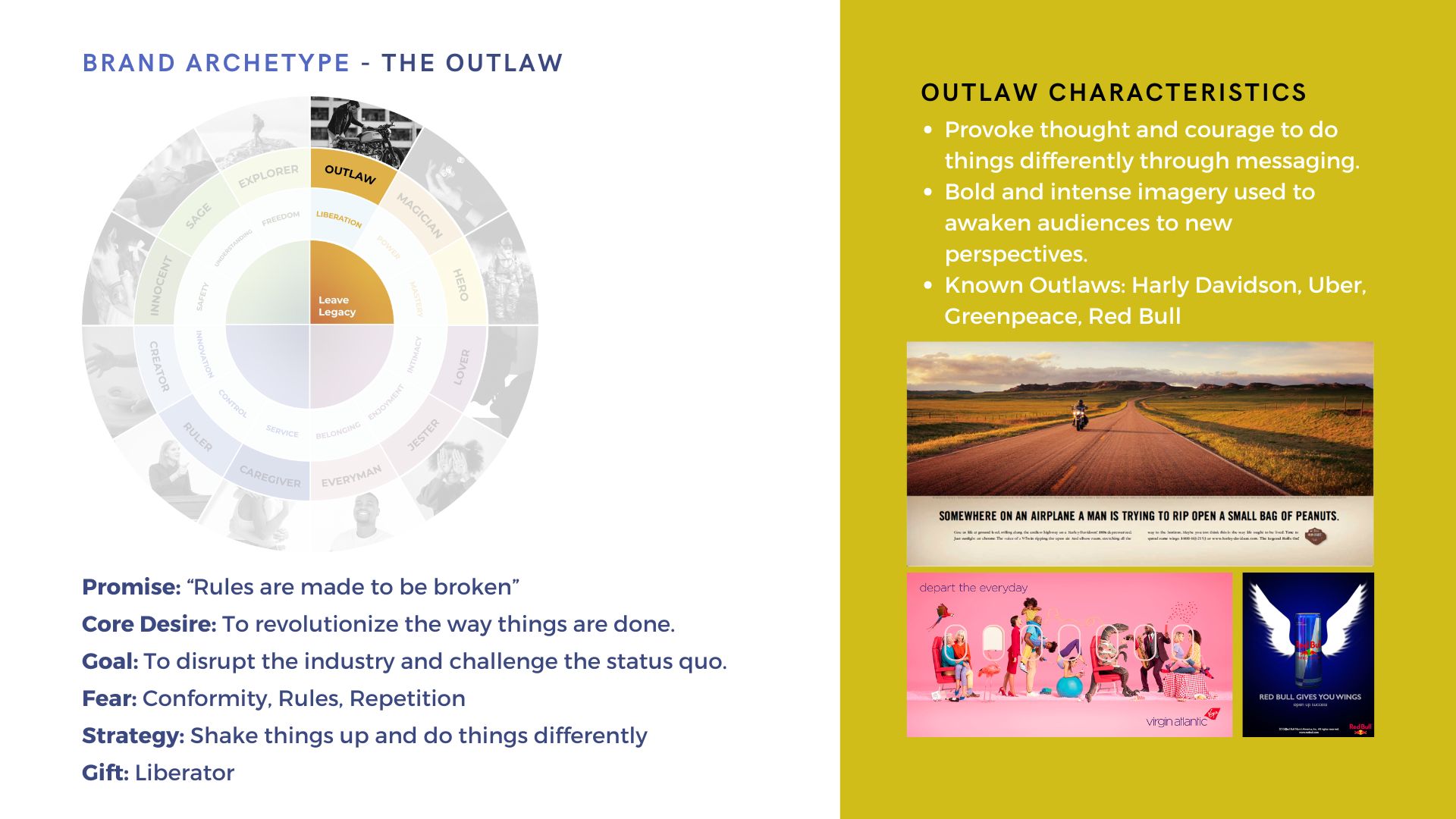
They tap into our collective psyche, our narrative DNA. Just as we recognize a Hero in a movie or feel instinctively drawn to the Wise Sage or the Fearless Outlaw in a book, we do the same with brands. It’s why we trust Google like a Sage, feel inspired by Nike like a Hero, or feel like Harley-Davidson gets us like an Outlaw.
These archetypes aren’t new. In fact, they’ve been around a long time. Which brings us to…
Brand Archetype Origins & Why They’re Powerful
The concept of archetypes was made famous by psychologist Carl Jung, who observed that humans tend to recognize and respond to universal character patterns. Mythologist Joseph Campbell later expanded this work through his idea of the Hero’s Journey, a narrative structure that echoes through literature, film, and yes, branding.
Why do brand strategists care? Because archetypes:
- Act as emotional shorthand: They help people “get” your brand faster. When you align with an archetype, you’re tapping into a subconscious recognition pattern already running in your audience’s brain.
- Cut through the noise: In crowded categories, clear archetypes are a shortcut to differentiation. They give your brand a feel, not just a look.
- Drive narrative cohesion: Whether it’s a product launch, a customer email, or a CEO keynote, archetypes help create a consistent story across everything you say and do.
The 12 Core Archetypes
There are 12 commonly used brand archetypes, each with its own promise, personality, core desire, fear, voice, and behavioral cues. They’re powerful starting points for shaping brand voice, messaging, visuals, and strategy.

We’ll break each one down below, but here’s a quick preview:
- The Innocent: Seeks simplicity, honesty, and happiness. Think: Dove.
- The Sage: Values truth, insight, and expertise. Think: Google.
- The Explorer: Champions freedom, discovery, and the journey. Think: Patagonia.
- The Outlaw: Breaks the rules to create something better. Think: Harley-Davidson.
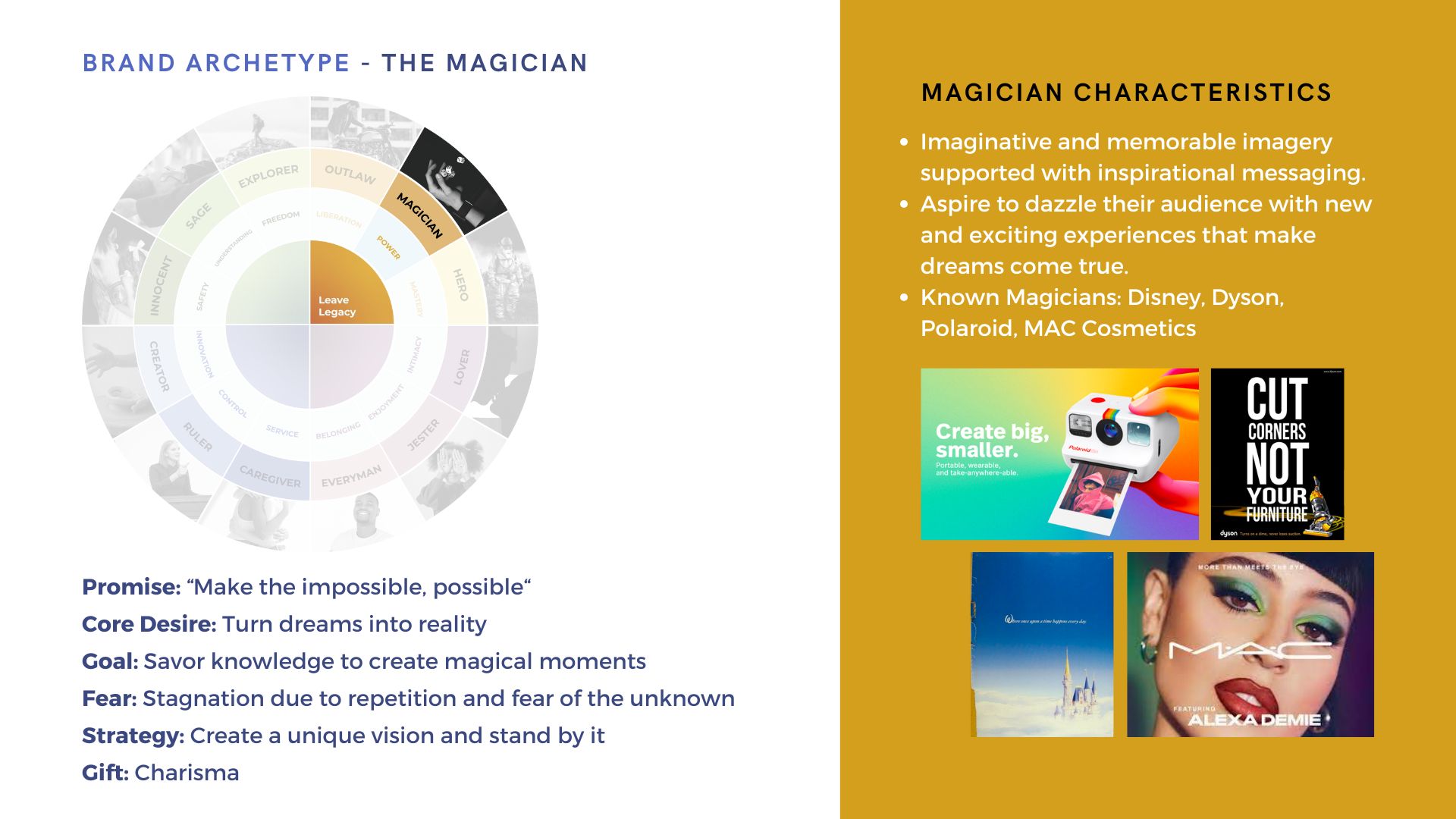
- The Magician: Turns the ordinary into the extraordinary. Think: Disney.
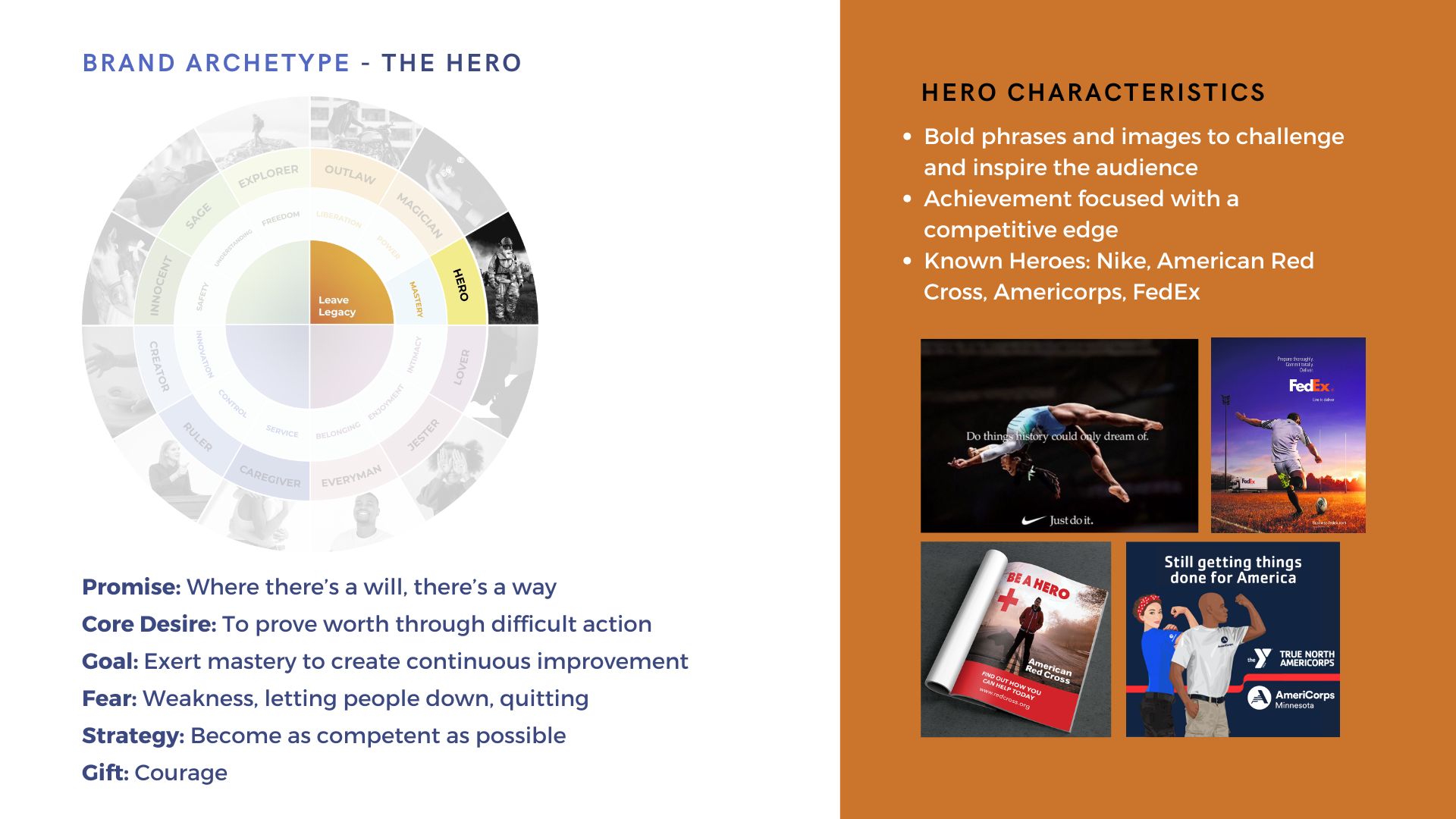
- The Hero: Overcomes challenges to inspire and empower. Think: Nike.
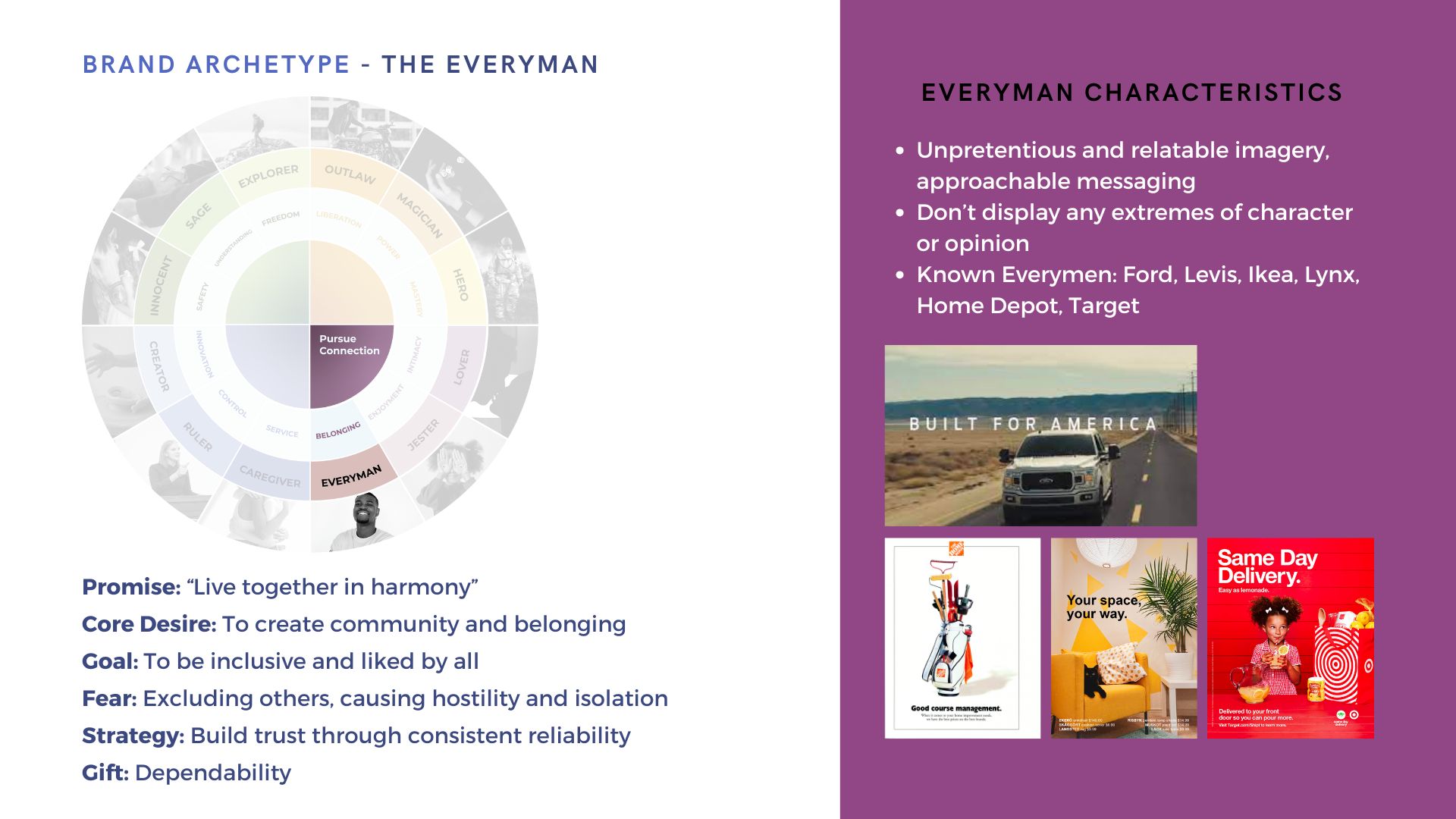
- The Everyman: Belongs, relates, and connects. Think: IKEA.
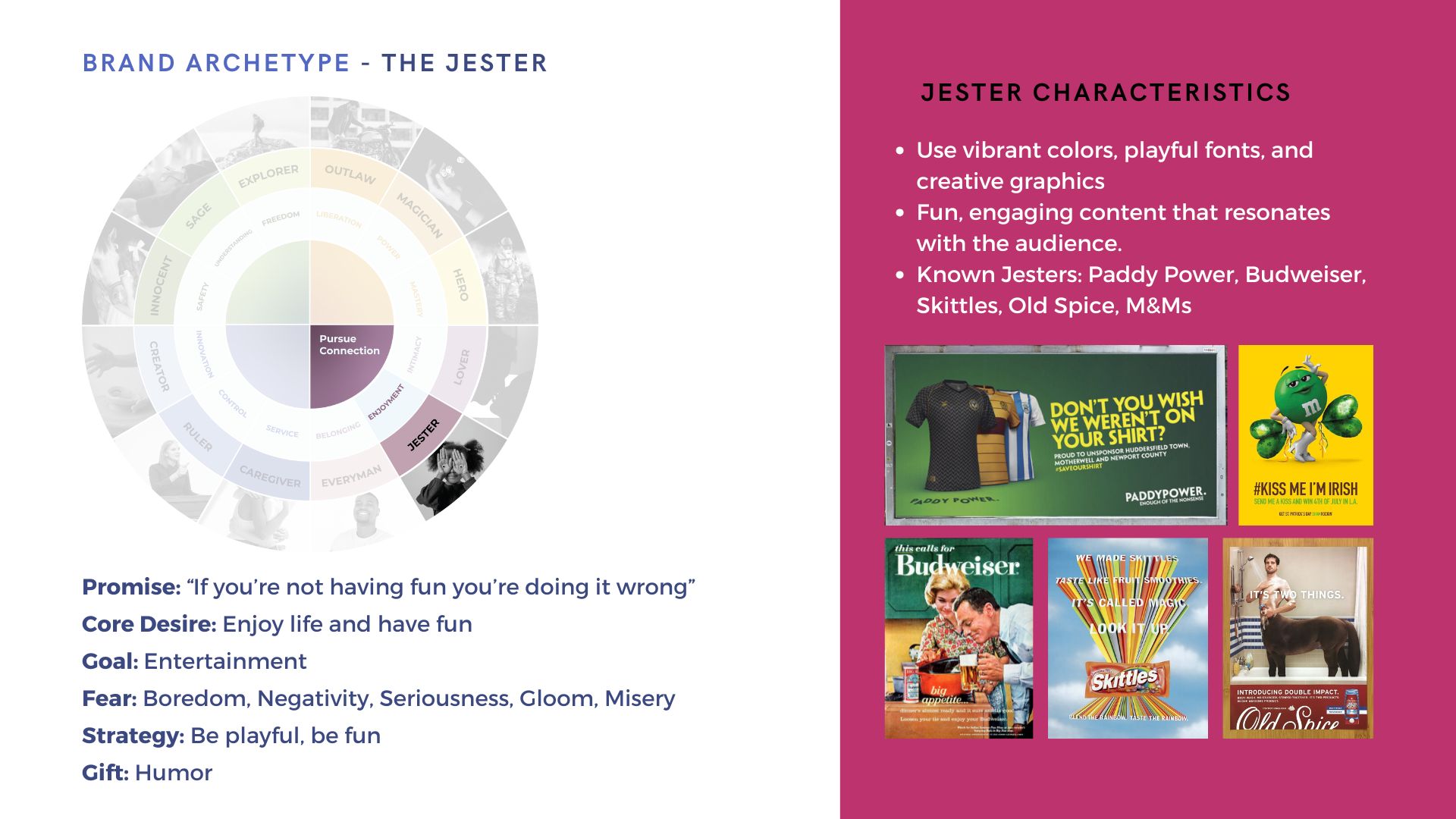
- The Jester: Brings joy through play and humor. Think: Old Spice.
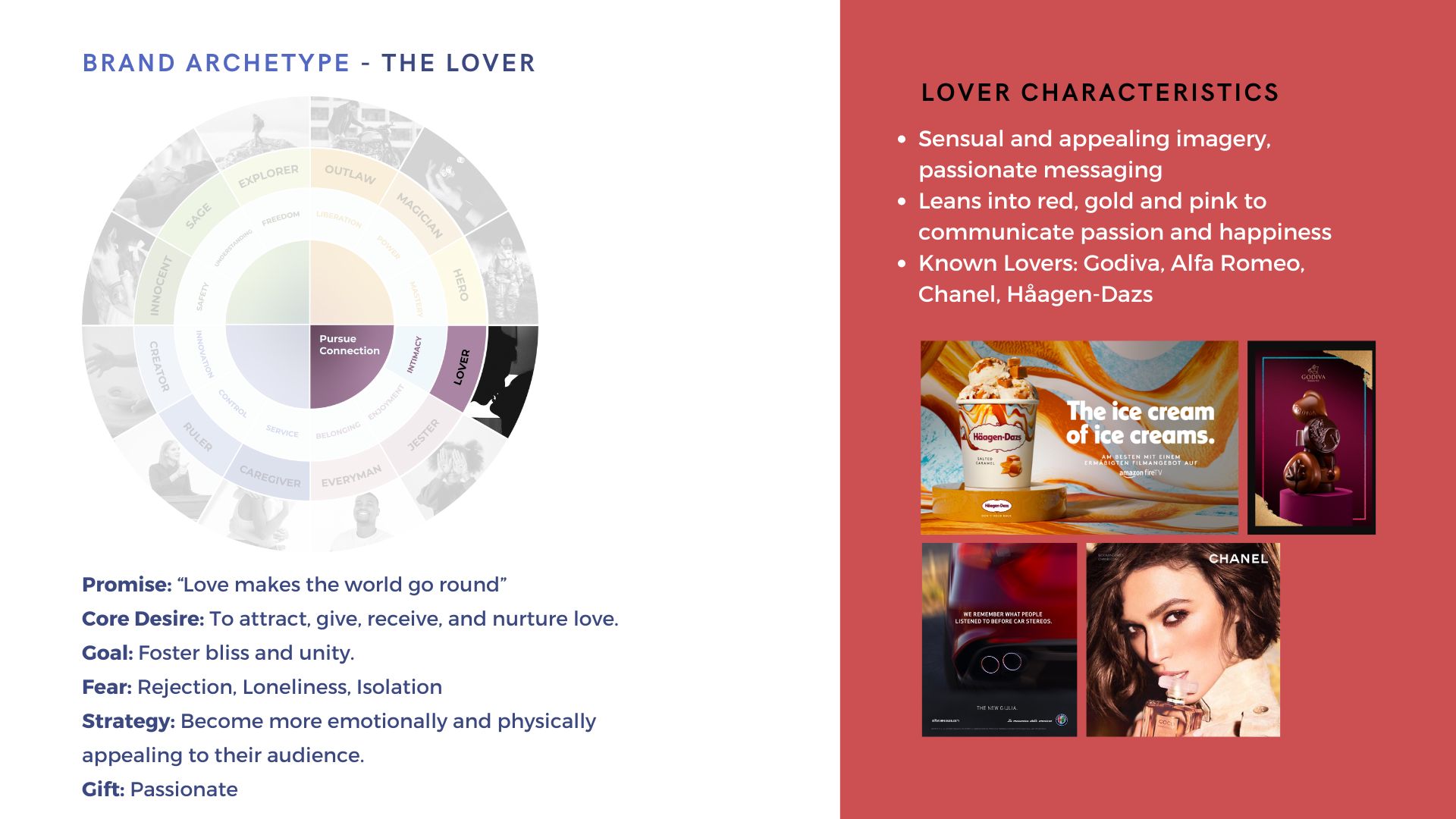
- The Lover: Celebrates intimacy, beauty, and passion. Think: Chanel.
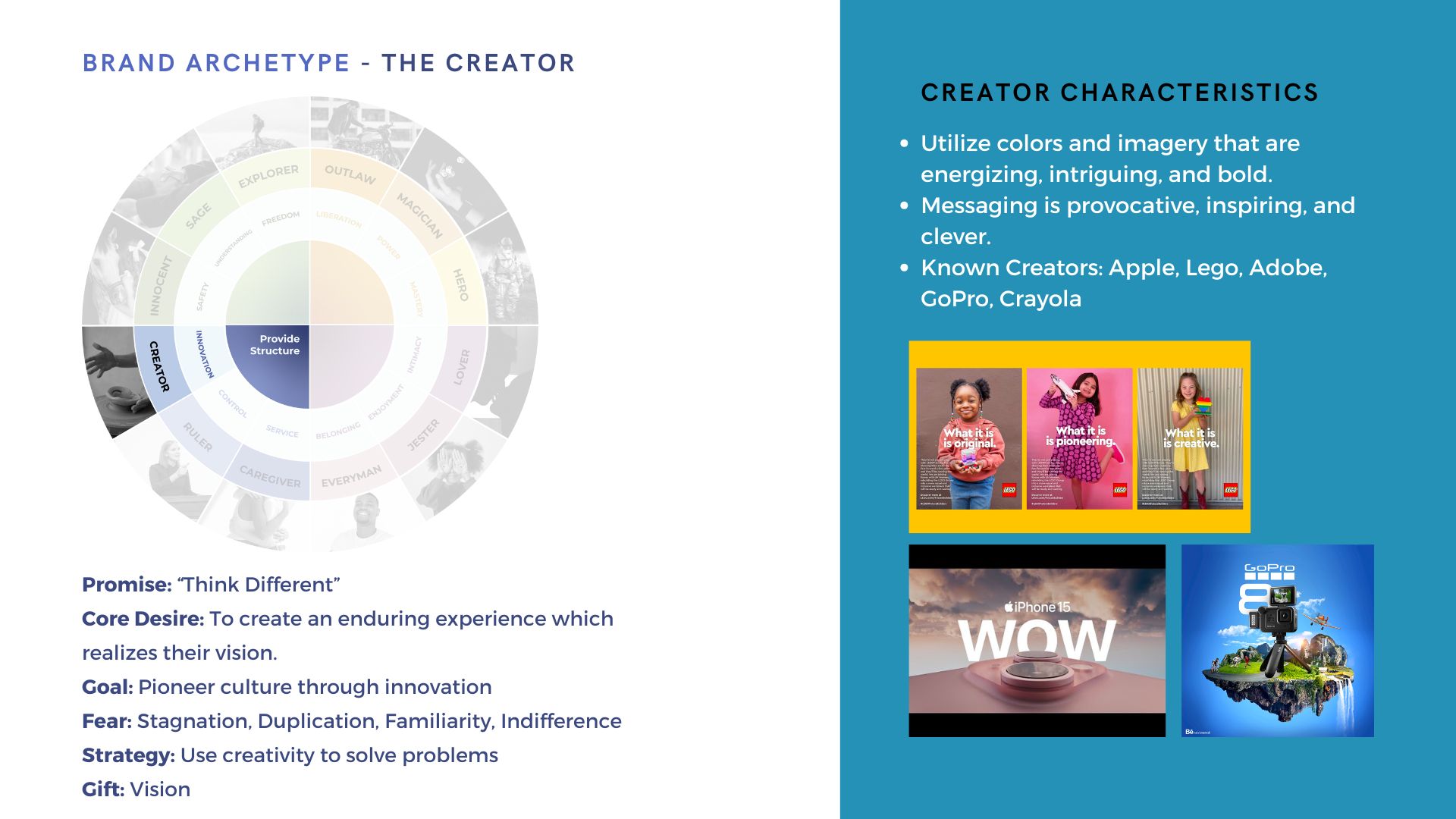
- The Creator: Innovates and imagines. Think: Adobe.
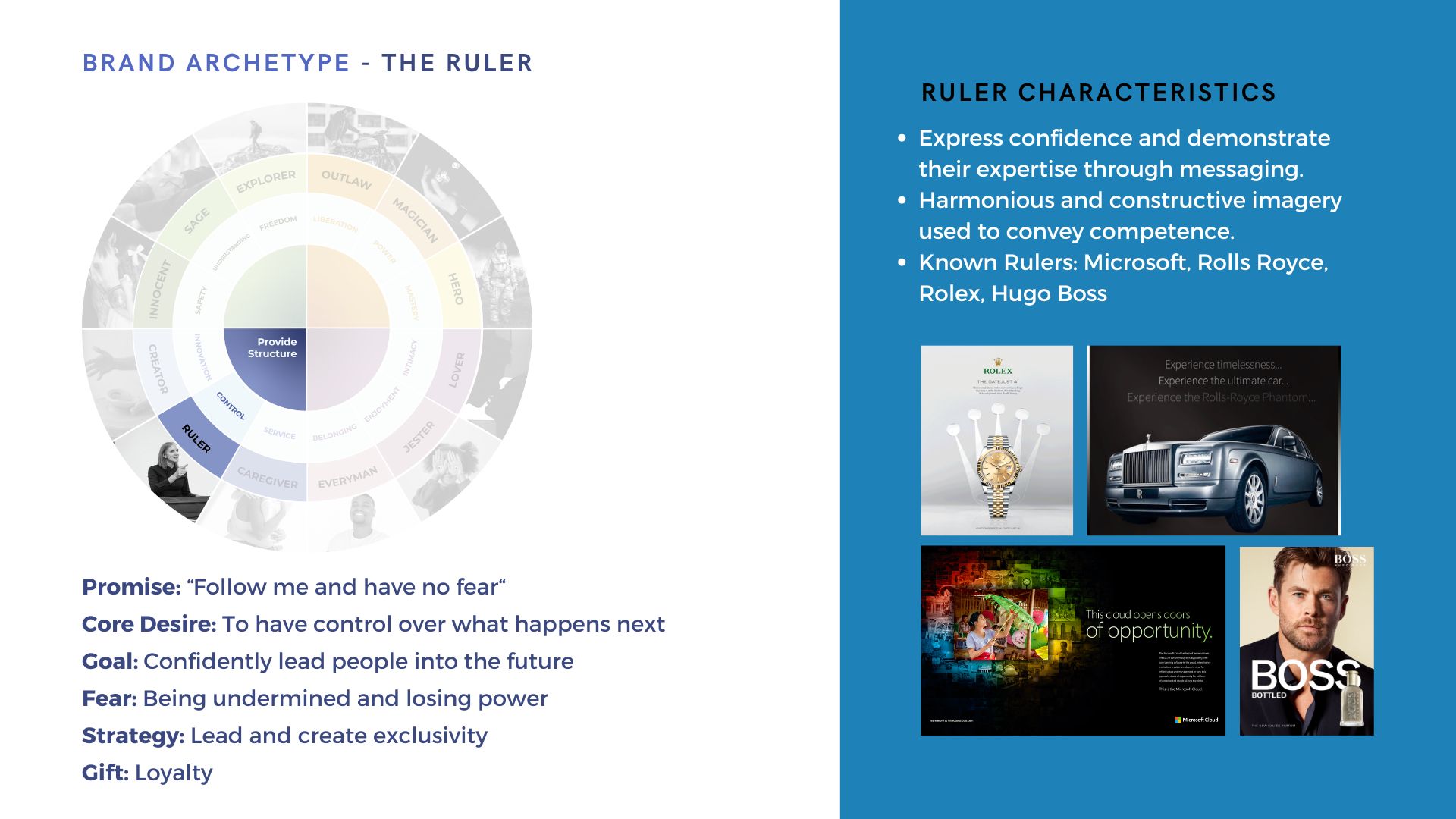
- The Ruler: Leads with control and order. Think: Mercedes-Benz.
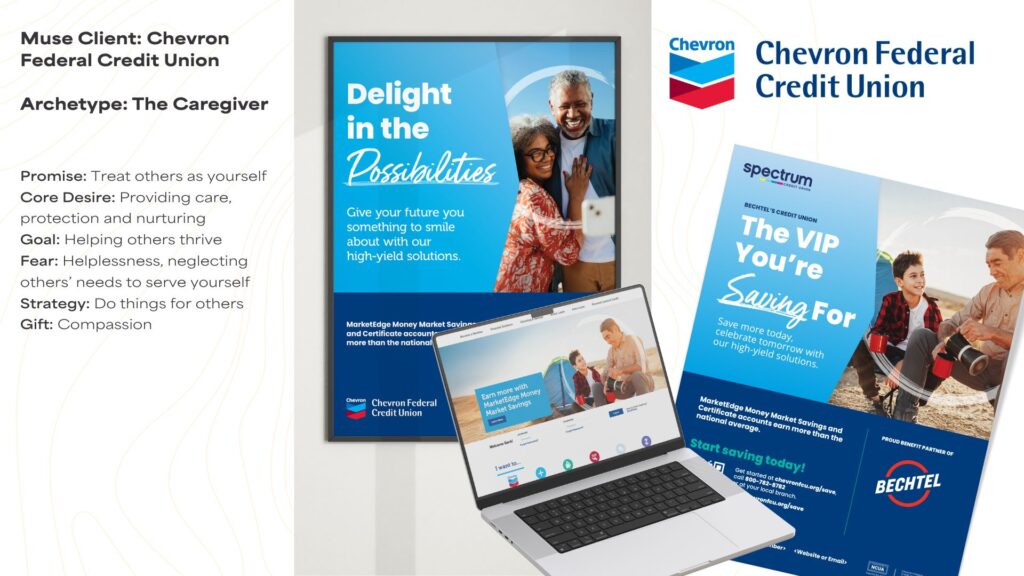
- The Caregiver: Supports and nurtures. Think: Johnson & Johnson.
Each archetype deserves a closer look to make it all click.

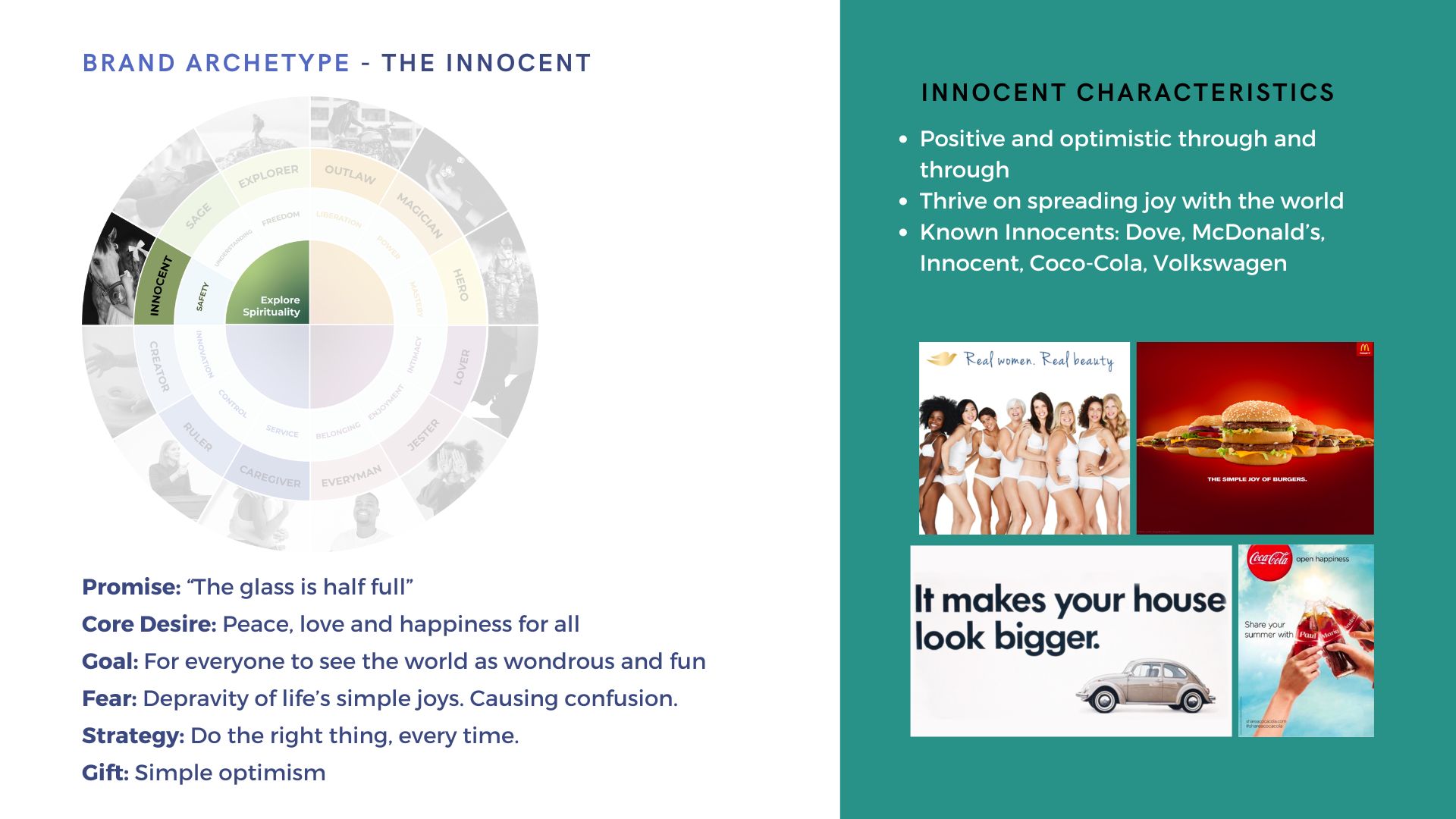
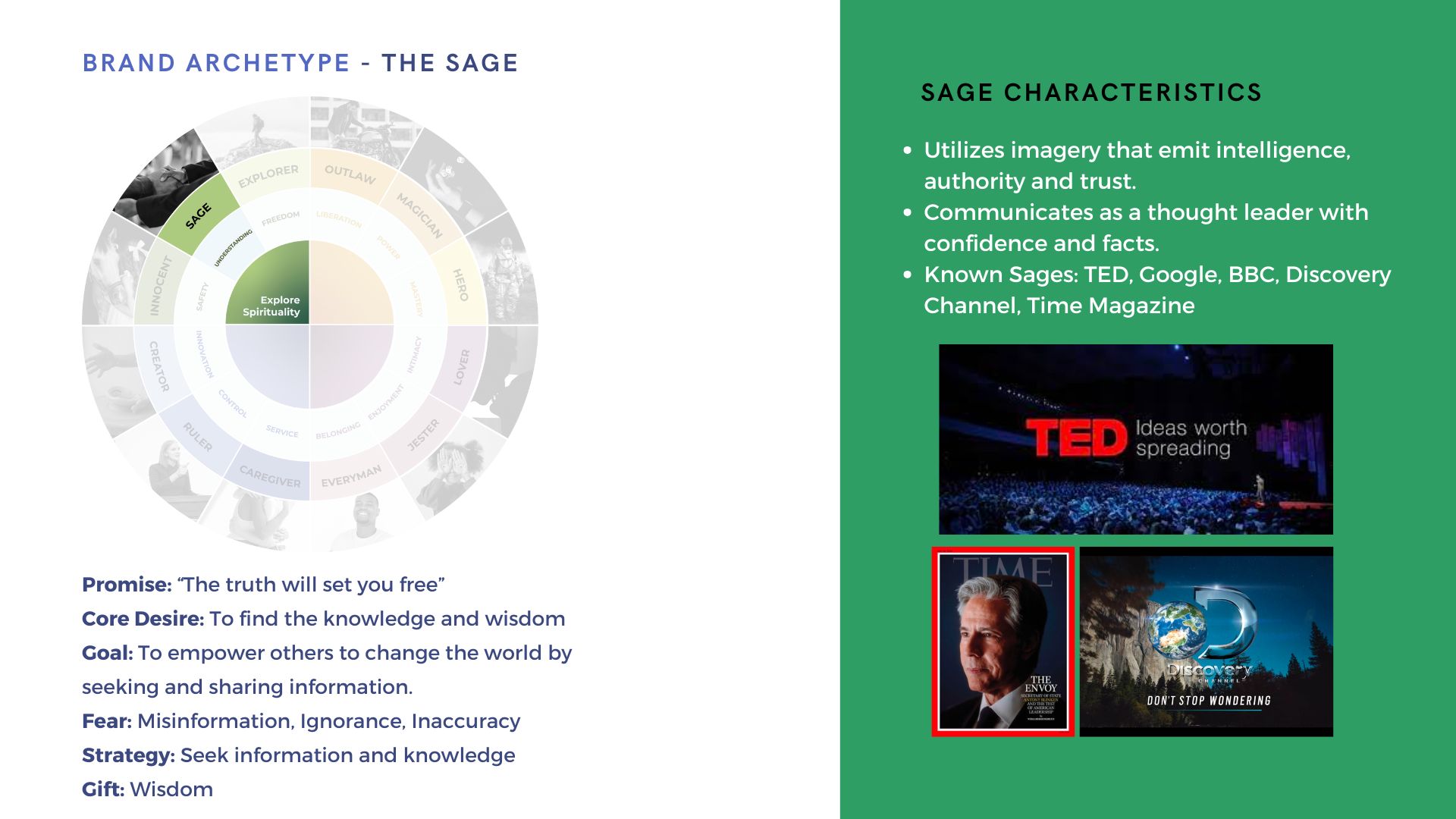
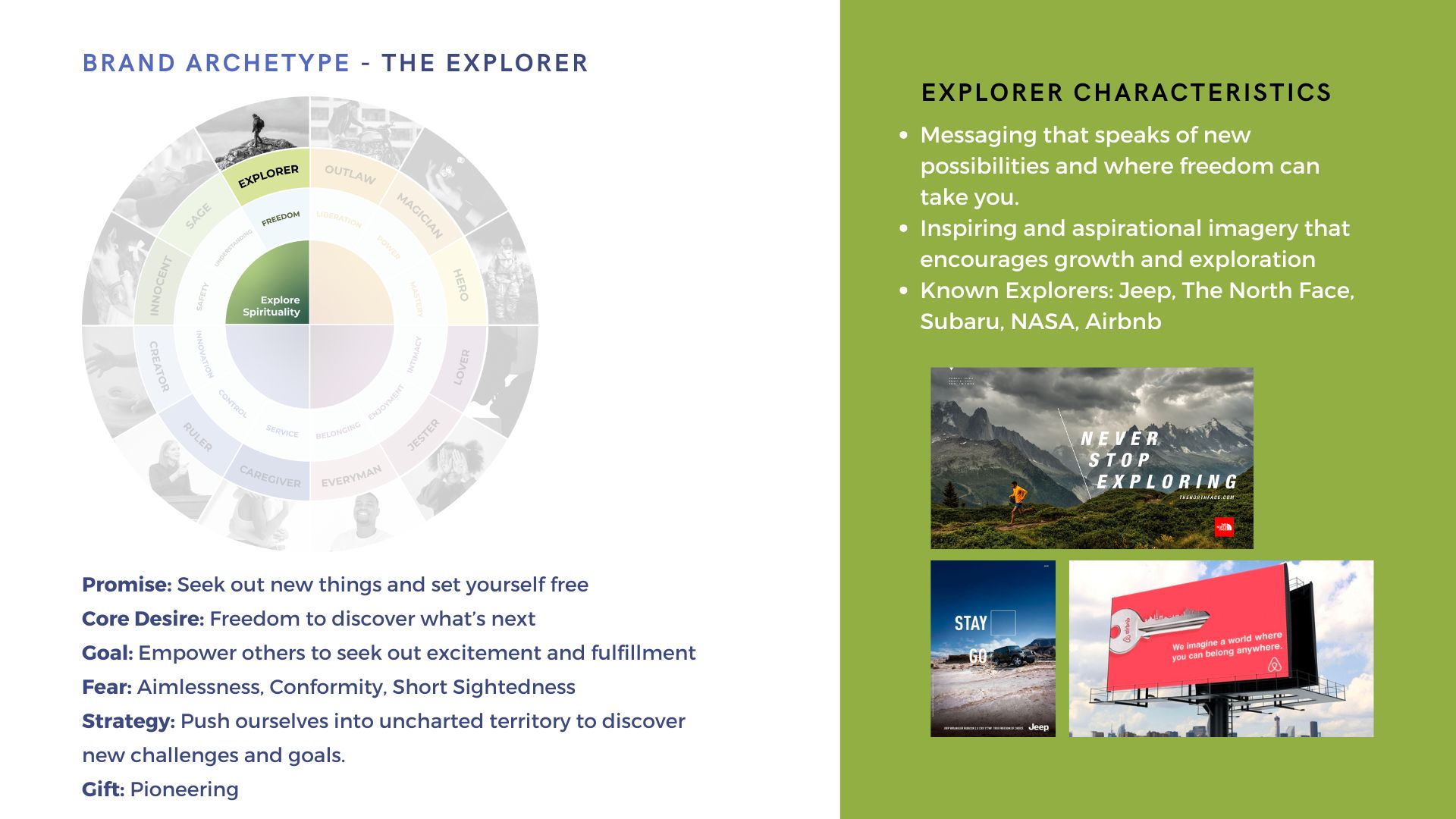
Brand Archetypes' Strategic Purpose
Brand archetypes aren’t just a creative exercise. When used properly, they become foundational tools for business strategy, brand positioning, and marketing execution. For mid-sized to enterprise organizations, they help drive clarity, alignment, and scale, especially in fast-moving, high-growth environments.
You don’t choose a brand archetype to be clever. You choose one to be clear. Here’s how archetypes bring more clarity to marketing and communications decisions.
Key Strategic Functions of Brand Archetypes
- Tone & Style: A well-aligned archetype helps you claim your space in the market with confidence. It clearly communicates you are with a tone and style that's your own. That clarity sharpens your messaging and narrows your competitive focus.
- Audience alignment: Archetypes help your brand reflect the identity or aspiration of your audience. Whether your customers see themselves as adventurers, caregivers, rebels, or creators, archetypes let them feel seen and understood.
- Decision-making filter: When brand decisions arise about voice, partnerships, campaigns, even product naming, a defined archetype acts as a consistent lens. If something doesn’t align with the brand’s character, it shouldn’t leave the drawing board.
- Internal alignment: Archetypes reduce the subjective “I don’t like it” moments that can derail creative work. They give teams a shared language to evaluate tone, direction, and consistency. That means less back-and-forth, and more momentum.
Missteps to Avoid When Choosing Your Archetype
Even smart brands get this wrong. Here are some common pitfalls:
- Choosing based on trendiness: Your archetype should be grounded in your truth, not what’s hot right now. The right archetype fits your business model, values, and culture. It shouldn’t feel like a costume.
- Mixing contradictory archetypes: While some nuance is fine, trying to be a Caregiver and a Rebel at the same time usually creates confusion.
- Treating archetypes as a branding “aesthetic”: An archetype is not just a vibe or visual. It’s a strategic choice that should guide how your brand sounds, acts, and evolves.
How a Brand Strategy Firm Helps
This is where the right outside perspective matters.
We help clients move beyond a surface-level understanding of archetypes. We dig into your culture, customers, market position, and goals to identify an archetype that isn’t just interesting, but usable.
Then we activate it across your organization. That includes messaging frameworks, tone-of-voice systems, visual direction, campaign structure, and AI training data, if needed. The result is a brand that feels aligned internally and differentiated externally.
Your team walks away with a tool that can be used every day to create clearer messaging, faster execution, and stronger results.
For Chevron Federal Credit Union campaigns, we leveraged their Caregiver archetype to deeply connect with members about an emotional topic: money and saving for future generations.
Brand Archetypes in Content Marketing
This is where strategy meets execution. Once your archetype is defined, it becomes the foundation for how your brand communicates across every channel. That includes your website, campaigns, social media, sales decks, and even internal messaging.
Put simply, your archetype isn't just a high-level concept. It's a practical tool for producing consistent, compelling, and on-brand content.
What Your Brand Would Say (and What It Would Never Say)
Think of your brand archetype as a character. What kind of language do they use? What do they care about? What do they avoid?
For example:
- A Ruler brand speaks with precision and control. It avoids slang or ambiguity. It leads with authority.
- A Jester brand is playful and bold. It might poke fun at competitors, use memes, or lean into humor.
- A Caregiver brand offers reassurance, warmth, and empathy. It avoids sharp edges and prioritizes clarity over cleverness.
- These tonal choices should show up in everything from LinkedIn posts to product descriptions.
Campaign Narratives and Content Funnels
Archetypes are especially powerful for shaping how your campaigns unfold. They give structure to storytelling, helping you guide your audience through awareness, consideration, and conversion in a way that feels cohesive and emotionally relevant.
For example, a Hero brand campaign might follow a journey of struggle, triumph, and empowerment. A Magician brand might invite the audience into transformation or discovery. A Sage brand might take an educational approach, positioning the brand as a trusted source of insight.
The result is a campaign that feels intentional and emotionally aligned from the first touchpoint to the last.
Internal Collaboration and Content Alignment
When everyone on your team is clear on your archetype, content production becomes faster and smoother. Brand, content, product, and customer experience teams can all pull from the same language and perspective.
No more "Does this sound like us?" debates in review meetings. Your archetype becomes a shared standard that enables scale and creativity without sacrificing consistency.
Translating Archetypes Into Actionable Tools
This is where our firm’s approach goes deeper. We help clients turn their archetype into content-ready resources, including:
- Brand voice guides with real-world copy examples
- Messaging templates for emails, landing pages, and social
- Content themes mapped to customer journeys
- Editorial guidelines to help internal teams and vendors stay on brand
When these tools are in place, your brand starts to sound like itself no matter who is creating the content.
Brand Archetypes in the AI Age
Artificial intelligence can generate content in seconds. But without the right guidance, it risks sounding like everything else.
This is where your brand archetype becomes more important than ever.
Maintaining Brand Soul in an AI-Saturated World
Automation is here to stay. Whether you're using AI to scale content, personalize outreach, or power your chatbot, the challenge is making sure your brand still feels human.
Archetypes solve for that. They give your AI models a clear personality framework, so your automated messages still feel intentional, on-brand, and emotionally aligned.
Training AI with Archetypal Voice
We’ve helped clients create custom GPTs and LLMs that are trained on their brand’s archetypal voice. That means:
- Fine-tuning tone, style, and vocabulary to match the archetype
- Creating content prompts that reflect the brand’s narrative structure
- Ensuring all output, from subject lines to FAQs, supports the brand identity
We helped DeliverThat, a full-service off-premise catering delivery management company, build a GPT trained on their Hero archetype. Their team uses it for sales communications that are punchy, persuasive, and perfectly on brand.
Your Archetype is a Competitive Advantage, Not a Mascot
Many brands zigzag through tactics, chasing trends and reacting to the market. Brands with a clear archetype operate differently. They show up with consistency and cohesion. A strong archetype creates instant recognition. It becomes a filter for decision making, and it gives your brand a unique emotional position that competitors can’t easily replicate.
Treat your archetype like intellectual property. It’s not a label. It’s your brand’s identity.
More Than a Personality: It’s Culture, Strategy, and Story
An archetype is not just about how your brand talks. It affects how your team operates. It influences hiring, customer experience, even product innovation. It also makes your content strategy more intentional. Campaigns become easier to plan, content pillars are easier to define, and storytelling becomes more natural. This is how brands move faster without losing themselves.
How Leading Brands Build and Defend Archetypal Positioning
Great brands are not just consistent. They are consistent with purpose. Think Disney as the Magician, Apple as the Creator, or Nike as the Hero. These brands stay in character even as they evolve. They build loyalty because they build identity.
They also protect that identity through internal training, brand audits, and cultural alignment.
Finding the White Space: Competitive Archetype Mapping
In many categories, certain archetypes dominate. If your competitors are all Sages, is there room for a bold Hero? If everyone sounds like a Creator, could your brand own the Outlaw? We help clients audit the competitive landscape and identify opportunities for differentiation through archetype selection and refinement. This is not just about standing out. It’s about standing for something different.
Define Your Archetype
Customers today want to connect with brands that feel real. They are loyal to companies that reflect their values, beliefs, or aspirations.
Especially for organizations going through change, an archetype can create clarity and focus at a time when both are in short supply.
Your Next Strategic Step
Take a moment to reflect on your brand:
- If your brand were a person, could you accurately define them?
- Is your messaging consistent across teams and channels?
- Could your customers describe your personality without seeing your logo?
If not, now is the perfect time to define and activate your archetype. Archetypes are a growth tool and competitive advantage, not a branding trend. It’s one your team can start using today. When we facilitate brand strategy meetings with clients, we help define a true archetype with a guide on how to leverage it. Interested in archetype identification? Reach out to our brand strategists here.
Brand Archetypes FAQ: Clarifying Common Concerns
It can, but usually one primary archetype should lead. Supporting tones can add dimension, but clarity is more important than complexity.
Not necessarily. Archetypes can evolve with your brand. If your mission, model, or audience shifts significantly, it might make sense to reassess.
Show the strategic value. Archetypes aren’t about fluff. They support decision making, reduce internal friction, and improve execution speed.
It drives ROI by improving alignment, speeding up creative, and increasing audience resonance. Better brand expression creates better business results.