
Personal Branding for Executives, Founders & Coaches
Personal branding is the business asset you can't afford to ignore, and this guide steps through why. Read on to see how a defined personal brand helps visible leaders differentiate, increase credibility, attract opportunities, and smooth transitions.

Jackie Bebenroth
Founder and Chief Brand Advisor of Muse.
Jackie is a seasoned brand advisor and executive coach who applies proven brand strategy frameworks to individuals, helping them define their personal brand, clarify their narrative, and articulate a clear sense of purpose.
Your reputation is being built whether you’re involved in the process or not. The only question is whether you’re the one controlling the narrative.
For high-visibility leaders like founders, C-suite executives, coaches, and consultants, personal branding isn’t a vanity project or a social media hobby. I believe it’s a deliberate strategic investment that shapes how the market sees you, how opportunities find you, and how much trust you command.
Done right, a strong personal brand is one of the most durable competitive advantages a leader can build. Without a strategy, you leave influence, deals, and credibility on the table.
This guide covers everything you need to know about personal branding:
- Who needs a personal brand
- What it really is (and isn’t)
- When to invest in it
- How it’s built and the key components
- Why it matters more than ever in today’s visibility-driven landscape
Who Needs a Personal Brand?
For leaders, a personal brand becomes a business growth asset that directly impacts influence and business outcomes. If you’re in a role where credibility is currency—and for most executives and founders, it absolutely is—then a defined personal brand is essential.
The data makes this impossible to ignore:
- 74% of Americans are more likely to trust someone with an established personal brand. [1]
- 82% are more likely to trust a company when its leaders are active and visible online. [2]
- 67% of consumers are willing to spend more with brands whose founders reflect their personal values. [1]
- 77% of consumers are more likely to buy from companies whose leaders are visible on social media. [2]
Trust is built through visibility.
Here’s how three different types of leaders leverage personal branding, and why.
C-Suite and Executive Leaders
A well-defined executive brand establishes authority that transcends any single title or company. For executives, personal branding helps shape organizational culture, internal alignment, and stakeholder confidence.
This is especially critical during leadership transitions, such as stepping into a new CEO role or navigating a company acquisition. A strong personal brand establishes instant credibility, bolsters trust among investors and employees, and ensures continuity of the company's reputation.
Founders and Founder-Led Businesses
In founder-led businesses, the founder’s visibility, whether intentional or not, often drives brand perception. A founder with a clear, compelling personal brand can accelerate sales cycles, build trust with investors, and differentiate a company culture. This is especially true in consultancy, advisory, and service-led businesses, where clients are often buying belief in the person behind it.
It's worth noting one important distinction: a founder's personal brand and the company brand are deeply intertwined but not interchangeable. Treating them as the same thing creates long-term strategic risk for the business's independence and the founder's aspiring exit plans.
The most resilient founder brands are built to complement the company's identity while remaining portable enough to stand on their own, because roles evolve, companies change, and a well-managed personal reputation is one of the few professional assets that follows you wherever you go.
As founders begin to remove themselves from the business, it's often a good time to reconnect with the business brand for a refresh to ensure that it reflects the attributes of the team, not the founder.
Coaches and Consultants
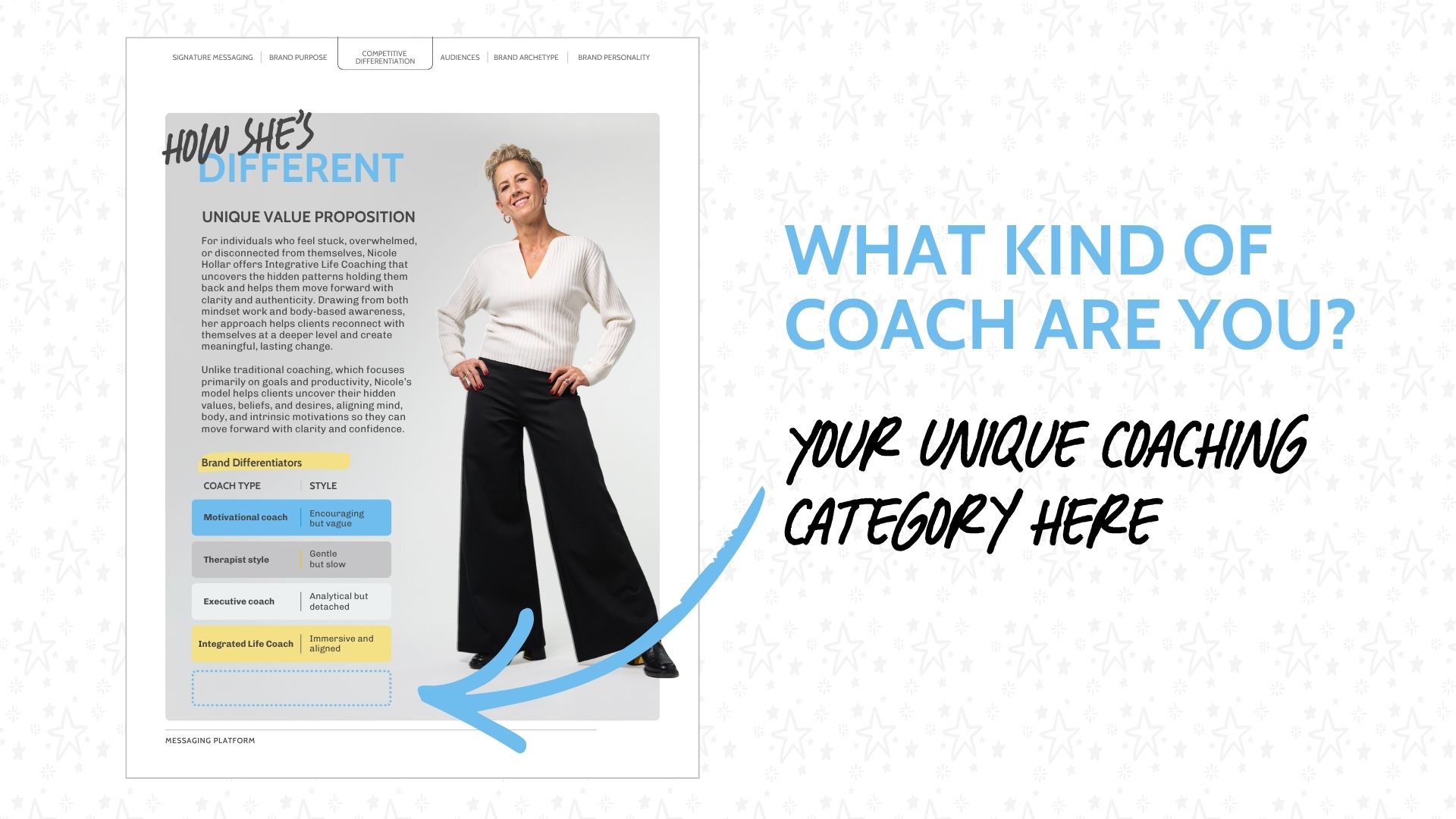
For coaches, the personal brand is the product. Unlike a company that sells software or a founder whose business can stand on its own, a coach's value proposition lives almost entirely in who they are. A personal brand often defines their methodology, perspective, and the trust they command. Without a clear, differentiated personal brand, even the most talented coaches are invisible in a market that has never been more crowded.
Specialization often commands higher perceived value and, therefore, higher price points. A coach with a distinct point of view, recognizable voice, and consistent presence in the right channels can command premium rates.
What Is Personal Branding & What’s the Process?
Modern personal branding goes far beyond headshots and a polished LinkedIn profile. Ultimately, it’s what you stand for in life, whether personally, professionally, or both.
I believe that personal branding is the intentional combination of positioning, personality, and visual identity that presents a clear, differentiated presence in your market. But the most important word in that sentence is intentional.
Start From the Inside Out
Many people think personal branding is just a well-written bio and a great headshot. Effective personal brands are built on something much more sustainable: a positioning platform.
Most consultants begin by looking outward: scanning market gaps, economic trends, and consumer demand signals.
At Muse, we start every brand engagement, including personal branding, from the inside out. We conduct deep inner exploration into your values, behaviors, motivations, and patterns. We look for the elements that are uniquely true about you, not just what the market expects from someone in your role.
Once that internal foundation is established, we align it with external opportunities. The intersection of what’s authentically true about you and what the market genuinely needs is where your real brand position lives!
Core Components of a Personal Brand
- Personal Brand Positioning: Your unique value proposition and competitive differentiation
- Brand Narrative: Who you are, what you contribute, and why you do it
- Mission Statement: A very condensed version of what you’re known for and who you serve
- Values: Beliefs you prioritize and hold true
- Voice: How you communicate consistently across every channel
- Visual Identity: The supporting layer that expresses the brand
The first five components make up your messaging platform. A visual identity is the final layer that ties this all together!
Stage 1: Create Your Messaging Platform
Define Your Position
Positioning answers a deceptively simple question: what do you want to be known for, and by whom? This is where many leaders struggle, because positioning requires making choices, and that often means saying no to some things to say yes to the right ones.
Your position is the specific intersection of your expertise, your perspective, and the audience you serve best. A strong position is narrow enough to be memorable and broad enough to support a career. It should be distinct from how your closest competitors describe themselves, and it should feel unmistakably like you.
This stage also includes defining your personal brand's core components (positioning, perspective, values, voice, and visual identity) and ensuring they form a coherent, differentiated whole rather than a collection of independent assets.
Craft Your Brand Narrative
Strategy without language is just theory. Your brand narrative becomes something you can actually say consistently, confidently, and in a way that resonates with the right people. At its core, it's who you are, what you contribute, and why you do it.
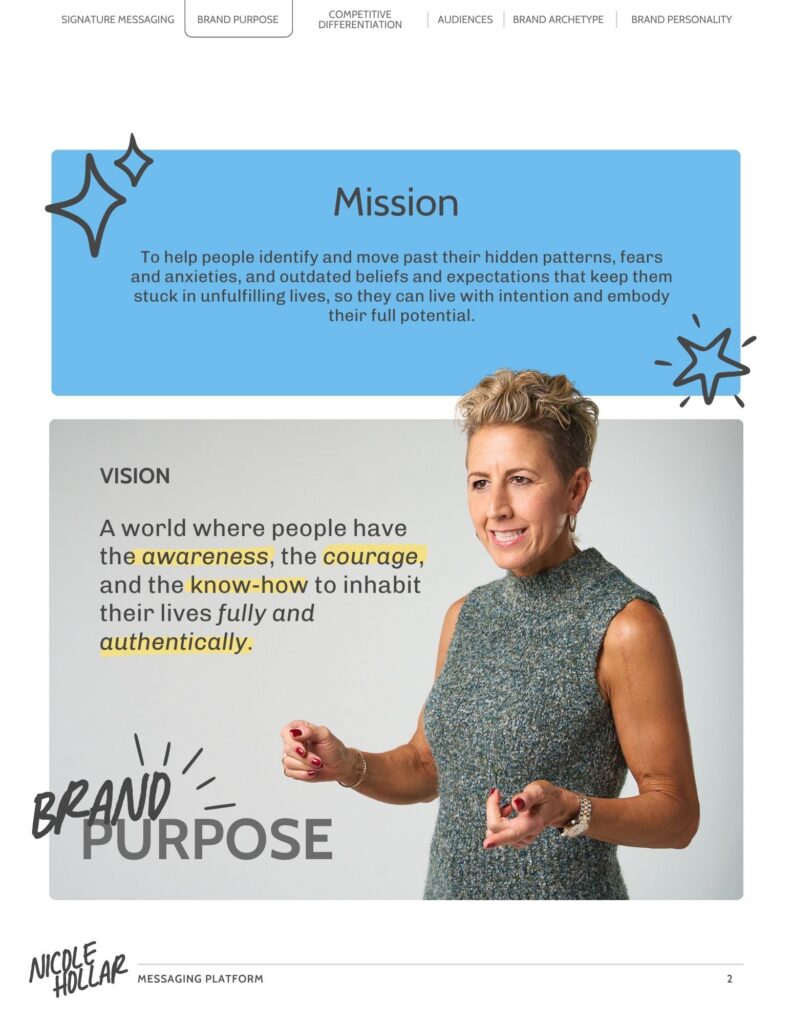
Identify Your Personal Mission Statement
The personal mission statement is the grounding element of every personal brand we build. Over the years, I’ve deployed this formula that distills complex thoughts and feelings into a simple statement.
Personal mission statement formula: I help [audience] do [action] to achieve [impact].
Here’s what this sounds like in action for my own personal brand: I help brands and leaders communicate clearly so they can make a greater impact in the world.
This statement is the north star for my professional decisions. Not only has it inspired the work we do here at Muse, but it also informs decisions about my thought leadership strategy.
Establish Your Brand Voice
A strong messaging platform also defines your brand voice: tone, cadence, and style that make your communication recognizably yours, no matter where your content lands. You should sound consistent whether you're writing a LinkedIn post, delivering a keynote, or being interviewed by a journalist.
For leaders who delegate content or communications to a team or freelancers, your messaging platform becomes indispensable. It ensures that your brand sounds like you even when you're not the one writing it!
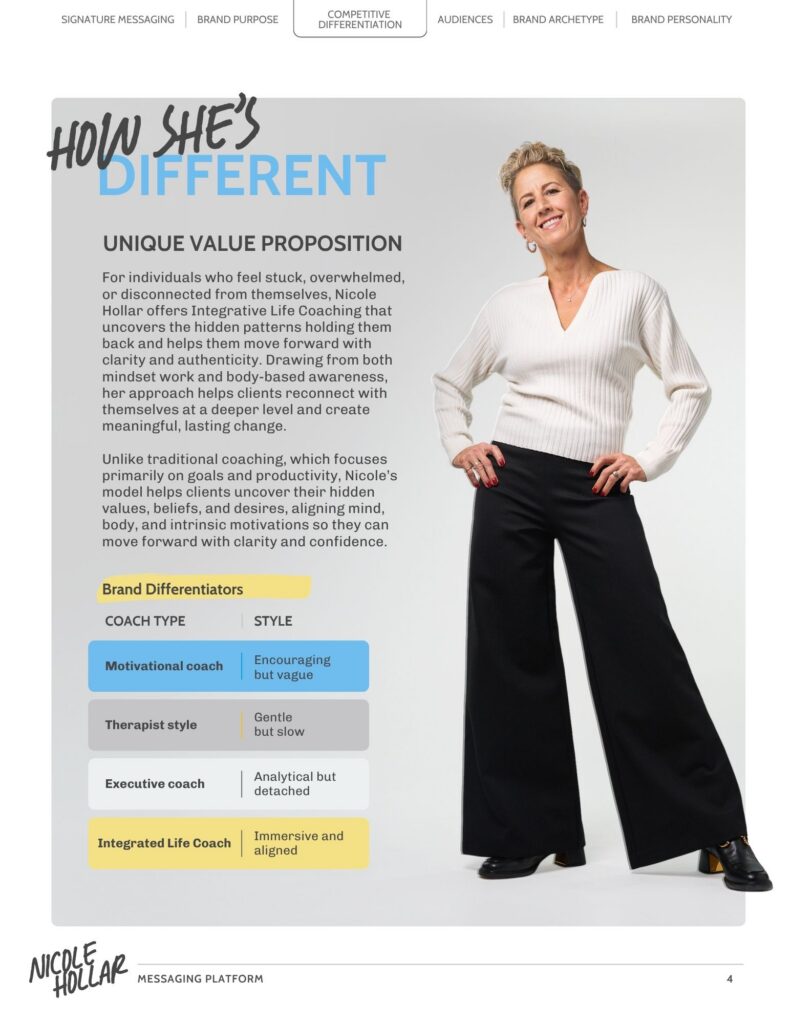
Click through a preview of one of our personal branding clients' messaging platforms.

Stage 2: Personal Visual Identity
Once your positioning, messaging, and voice are defined, visual identity gives your brand a recognizable look.
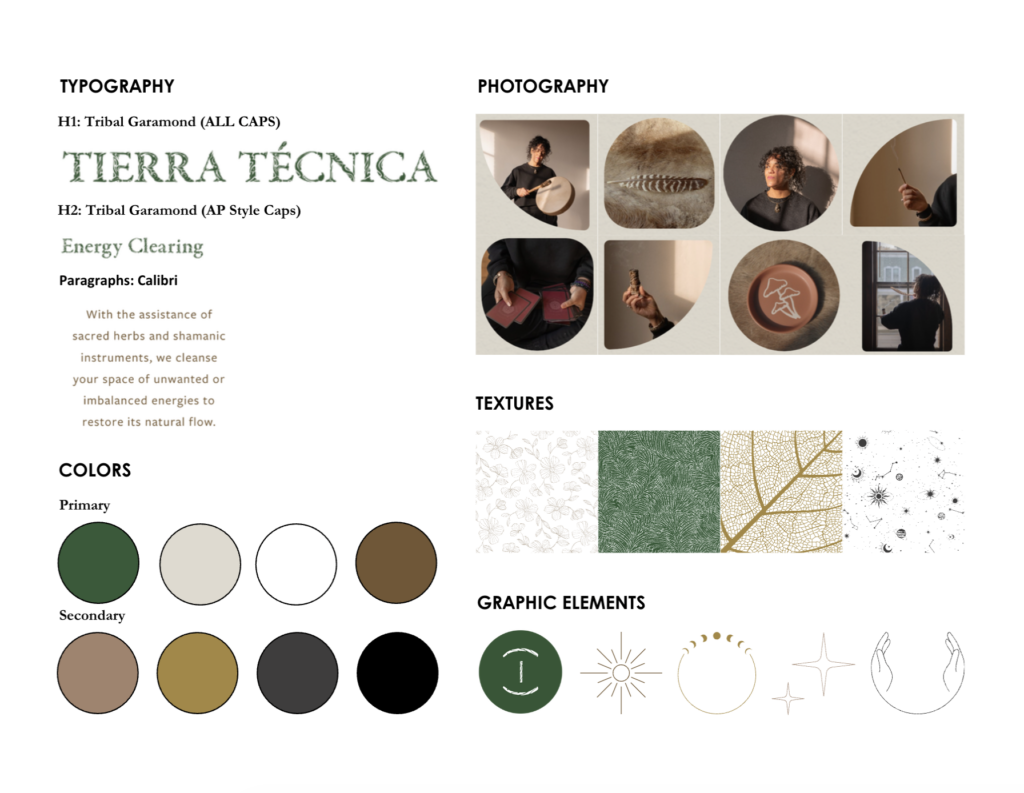
Signature type treatment: Your name rendered in a typeface that evokes the right feeling, whether it’s elegant, bold, authoritative, or approachable.
Typography: A primary font for headlines paired with a secondary font for body copy.
Color palette: One primary color anchored by up to three accent colors, creating a consistent and versatile visual language across platforms and materials.
Photography: One of the most underestimated personal brand elements! One headshot isn’t enough; consider a complete library that captures your presence. I always recommend a variety of headshots, standing and seated shots, candid working moments, and environmental portraits.
Share your messaging platform with your photographer before the shoot so their creative captures the feeling your brand is meant to evoke.
For Tierra Técnica, we refined visual elements and defined the styles that tied their brand together.
Stage 3: Activate and Express
The final stage is where strategy meets the world. This is when your brand comes to life through visual identity, content, and a deliberate thought leadership ecosystem (more on this later), all designed to reinforce your position and extend your reach to the audiences that matter most.
Activation looks different for every leader depending on goals, industry, and bandwidth. For some, it means a personal website, a speaking highlight reel, and a consistent LinkedIn presence. For others, it includes media placements, podcast appearances, or a content series built around a signature idea.
What matters is that every element ladders back up to the same central position. Consistency, over time, is what builds recognition and trust.
Everyday Consistencies to be Considered
The strongest personal brands aren’t built by your social presence or even speaking engagements. They’re fueled by the way you show up as a leader every single day. These are unexpected ways a personal brand has helped our clients:
- Decision-making patterns and leadership style that reflect your stated values
- Internal communication and team alignment that reinforces your brand from the inside out
- Reputation built through others: word of mouth, referrals, and how people describe you when you’re not in the room
- Subject matter authority sought out by national journalists for interviews and coverage
The Thought Leadership Ecosystem
The ‘Activate & Express’ stage of personal branding is one of my favorite parts to talk about because it’s where we see the brand come to life, especially through thought leadership!
A consistent, aligned thought leadership ecosystem combines elements and tactics that demonstrate and reinforce your mission. It helps you show up strategically in the right places with the right message.
Thought Leadership Ecosystem Elements
- Articles, blogs, and contributed content that establish intellectual authority
- Speaking engagements and panels that build live credibility
- Media features and PR that amplify third-party validation
- LinkedIn content (the primary platform for executive visibility)
- Podcasts, webinars, and interviews that deepen audience relationships
A note on SEO and GEO (generative engine optimization): leaders who consistently publish authoritative content on a focused topic build credibility with human audiences and become answers in search engines and AI tools.
In an era where the first touchpoint may be an AI-generated response, having a consistent brand presence is what determines whether you show up at all.
Our content strategists blend data, content best practices, and positioning to help leaders determine the best tactics and topics to achieve visibility goals. Learn more about our content marketing and communications offerings here.
When to Invest in Personal Branding
It may not seem like it on the surface, but timing matters. Personal branding investment is most powerful at inflection points, when clarity, differentiation, and visibility directly impact what happens next in your career or business.
These are the most common times that leaders approach us for personal branding and why it makes sense.
Career and Leadership Transitions
New roles and exits are defining moments, and they’re too important to navigate without a clear identity. Whether you plan to step into a CEO role, leave a company, or navigate a founder identity shift, a defined personal brand ensures that the market knows exactly who you are and what you stand for.
Preparing for Thought Leadership
Thought leadership without a defined personal brand is like turning up the volume on a message that hasn’t been written yet. Before you launch content, PR, or speaking initiatives, the strategic foundation needs to be in place. Without it, visibility efforts become fragmented, diluted, and difficult to measure.
Entering or Competing in Saturated Markets
In crowded industries like coaching, consulting, and technology, everyone has credentials and experience. What sets you apart is a point of view that’s yours alone. When competitors look and sound the same, it’s well-positioned personal branding that makes you the obvious choice.
Opportunity-Driven Moments
Many leaders invest in personal branding when they’re ready to unlock the next tier of opportunity. Whether that’s a speaking career, a fundraising round, a board role, or expanded industry influence, a defined personal brand is the infrastructure that makes those doors easier to open.
Personal Branding as a Strategic Investment
The most effective leaders don’t leave their reputation to chance. They build it with intention and consistency because they understand that in a world driven by visibility, a unique voice and position is a competitive advantage.
When leaders don’t define their brand, others define it for them, and not always accurately or favorably. The costs are real. Several past personal branding clients revealed that before they created their brand, they had an inconsistent persona in their market, diluted visibility efforts, reduced influence, and missed opportunities. In high-stakes environments, ambiguity is a liability.
A defined personal brand builds confidence with your audience before any direct interaction. You’re positioned as a known and trusted authority, which reduces skepticism in high-stakes decisions and strengthens stakeholder relationships at every level. Personal branding can also:
- Establish credibility and trust
- Create differentiation in a crowded market
- Become an opportunity & monetization magnet
- Drive business and career growth
Building a powerful personal brand requires more than execution. At Muse, we know what’s required: strategic clarity, an objective outside perspective, and a structured approach to positioning that most leaders don’t have the bandwidth (or objectivity) to develop themselves.
That’s where working with a brand strategy partner changes the outcome. Muse personal branding clients walk away with:
- A brand messaging platform that defines position, mission, and tone
- A personal visual identity mood board crafted in a style that best reflects your brand
- Digital activation in the form of a website and social media templates
- Thought leadership strategy and content development support
The leaders who invest in personal branding at the right time operate differently. They step through the world with greater confidence, making every initiative, conversation, and opportunity more effective.
If you’re ready to define your brand with intention and build the strategic foundation your visibility deserves, let’s talk! Reach out to the Muse team here.
[1] Brand Builders Group, "Trends in Personal Branding Study"
[2] Entrepreneur.com / Nielsen, "Why Personal Branding Is Crucial for CEOs in Today’s World."