
Work
DeliverThat Outgrew Its Story. We Helped Them Write a New One.
A single workshop surfaced the position DeliverThat had already earned but hadn’t named.
DeliverThat is a true American entrepreneurship story. Two co-founders started a catering delivery company in college, before DoorDash had saturated the market, and identified a gap those apps couldn’t fill: the high-volume catering order. DoorDash drivers don’t have the packaging materials, the vehicle space, or the training to set up a full catering spread in a corporate office or event venue.
DeliverThat built its entire operation around that gap, spending a decade recruiting and training a national network of thousands of drivers to handle high-touch catering delivery with the professionalism restaurants expect.
Then the company evolved. They developed technology that allowed restaurants to take catering orders directly through their own websites, bypassing third-party platforms like ezCater and putting revenue and customer relationships back in the hands of the operator.
But the brand hadn’t caught up with what the company had become. When the leadership team came to Muse, they were still perceived as a delivery company. They needed to be understood as something bigger.
The Challenge: A Company That Had Outgrown Its Story
DeliverThat had built real operational depth and was now layering in meaningful technology. But their messaging was still anchored to delivery. That gap was showing up everywhere.
- The brand had no clear answer to: “What do you stand for beyond driving food from restaurant to customer?”
- Messaging across delivery services, technology offerings, and target audiences wasn’t cohesive
- The media and marketing team was producing videos, podcasts, and content at a high volume with no unifying mission
- The business was being evaluated alongside generic delivery providers instead of strategic operations partners
The Solution: Finding the Position They Had Already Earned
Muse led a focused brand workshop with five members of the DeliverThat leadership team. Two hours. That was all it took.
The position was already there. The leadership team had built it through a decade of relationship building and operational excellence. They just hadn’t named it yet. By the end of the session, it was clear: DeliverThat helps restaurants increase revenue and profit through off-premise solutions. The new position wasn’t a pivot. It was a promotion.
From that foundation, Muse expanded the engagement into three areas.
1. Brand Positioning and Messaging
Muse reframed DeliverThat from a logistics provider to a revenue and profit authority for restaurant operators. That shift changed everything downstream: how they introduced themselves, who they were targeting, and what their sales conversations were anchored around.
- Core value proposition centered on restaurant revenue and profit growth through off-premise solutions
- Target audience sharpened to restaurant operators and multi-unit brands seeking catering and technology solutions
- Messaging hierarchy aligned across sales outreach, trade show materials, and marketing channels
2. Visual Identity Refinement
The logo and core color palette were working. DeliverThat had built real equity in them and there was no reason to walk away from that recognition. What the visual system needed was expansion: a set of tools that would let the brand express its new position with the confidence and sophistication of a strategic partner.
Muse developed a full suite of visual brand extensions that gave the identity room to do more without starting over.
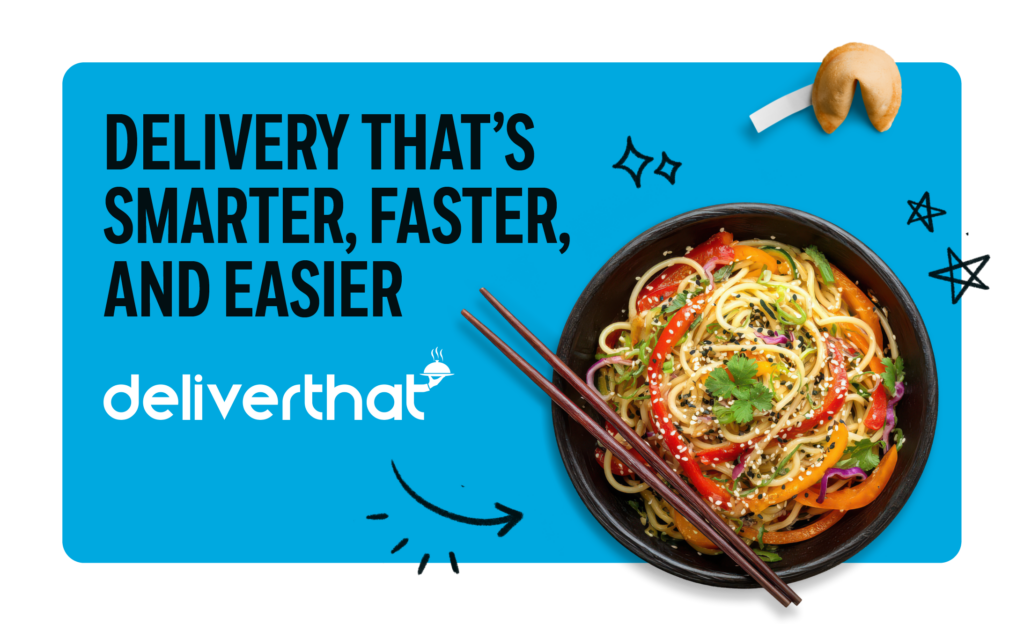
- Custom illustrative elements built specifically for DeliverThat’s world: the choreography of a well-executed catering setup, the systems and logistics that make high-volume delivery look effortless
- A cohesive typographic system and design patterns that brought consistency across every touchpoint
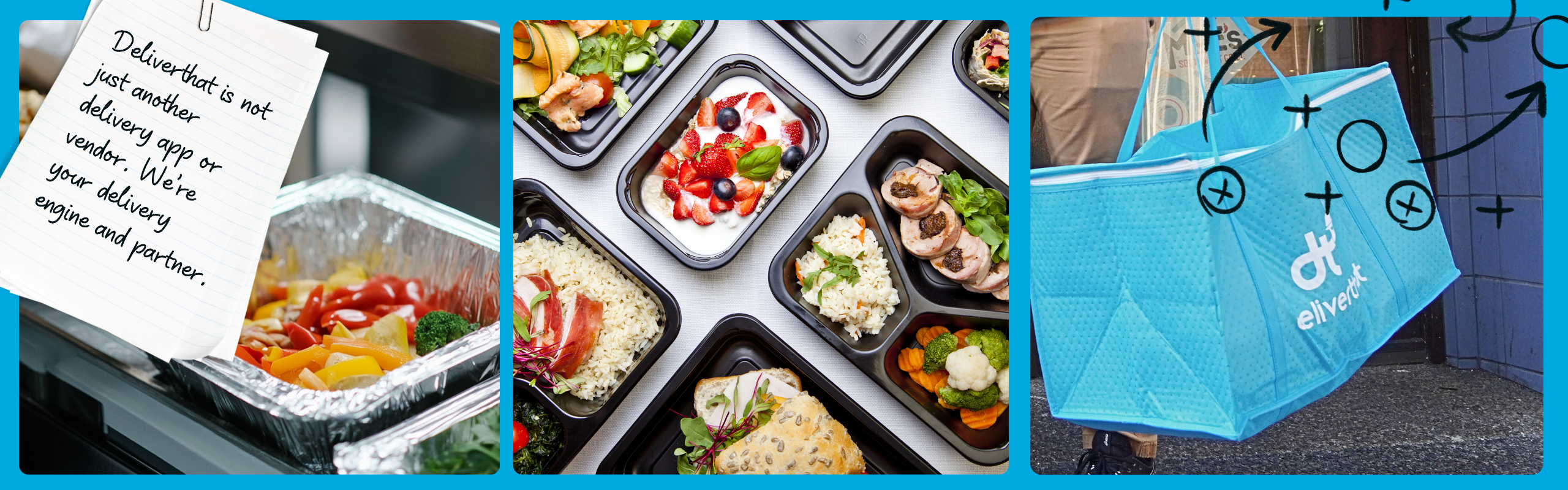
- Polaroid-style image framework including a branded format for featuring photography of real catering setups in the field
- Updated photography guidelines for capturing a cohesive look in the field.
The result felt like a natural evolution: recognizable, but noticeably elevated. Approachable enough to open a conversation, credible enough to close one.
3. Content Strategy and Marketing Alignment
Before the engagement, DeliverThat’s marketing team was operating like a small media company, producing videos, podcasts, and content at a consistent clip without a clear editorial mission. The effort was real. Visibility ebbed and flowed, but there wasn’t traction.
The new positioning gave the team an anchor. Muse worked with them to redirect content around the position: what restaurant operators need to know about catering revenue, how to evaluate technology partners, where they can stop profit leaks in their off-premise lifecycle. The podcast found its focus. The team produced valuable social and blog topics that educated operators on how to make more money, which was always top of mind.
The Results: Better Leads, More Technology Demos, a Team with a Mission
The engagement is still relatively new, but the early indicators are meaningful.
- An increase in inbound interest from mid-size restaurant brands, a higher-quality segment than DeliverThat had been attracting
- Growth in technology demo requests, signaling that the market is beginning to engage with the platform side of the business
- A marketing team that now operates with a defined mission, spending less time on content that doesn’t connect and more time on material that builds the right conversations
The most significant shift is perceptual. DeliverThat is no longer being evaluated as a delivery vendor. They are being seen as a partner with a point of view on how restaurants grow.
Rave Reviews.
See what our clients have to say about working with our team.