
A Guide to Rebranding vs. Brand Refresh vs. Refinement
Here’s how to spot the difference between rebranding vs. brand refresh and how both are different than brand refinement.

Jackie Bebenroth, Muse Founder & Principal
Rebrand, Refresh, or Refine? How to Know What Kind of Brand Change You Actually Need
When new clients come to us, they're often in some form of an identity crisis. They know they need a change, and they think they have an idea of what they need, but they are nervous about making the wrong move. Branding can be a significant investment with long-term implications.
What they usually mean when they say "we need to rebrand" is that something feels off. The business has grown, matured, or shifted, and the brand no longer reflects who they are today.
That does not automatically mean it's time to start over. In many cases, the smartest move is not a full rebrand at all. Choosing the right level of brand change matters because each option comes with a very different cost, timeline, and impact on your customers' experience.
At Muse, we think about brand evolution in three clear categories: Rebrand, Refresh, and Refinement. Looking for a quick reference? See the chart below.
We use this framework with clients, and we’re actively applying it to our own evolution in the coming months as we celebrate 15 years in business.
First, a Helpful Way to Think About Brand Evolution
Brands evolve the same way people do. The way you dressed at five did not work at fifteen. And what felt right early in your career likely does not reflect who you are today.
That doesn't mean those earlier versions were wrong. They were right for the stage you were in.
The same is true for businesses. Early-stage brands are often built quickly and affordably, scrappy by design, functional enough to get into the market. As companies grow, specialize, and charge more for their offerings, the brand needs to mature alongside them. When it doesn't, tension begins to show. Messaging becomes over-explained. Visuals feel stuck in an earlier era. The brand no longer carries the weight of what the business has become.
That's usually the moment leaders start thinking about change.
Over the years, we've refined this chart as a reference for our team; now you can use it, too!

Rebrand: A complete name and identity change, often tied to repositioning
A rebrand is the most significant type of brand change. Think of it as a true reset. It's bold. Deliberate. Not without risk.
A rebrand typically includes a new:
- Company name
- Logo and visual identity system
- Positioning, including different or repackaged products and services
- Mission and vision statement
In my experience, rebrands are usually triggered by one of two scenarios. The first is a fundamental shift in the business itself: a merger, acquisition, or dramatic change in offerings or audience. The second is a reputation challenge where negative associations have become difficult to overcome.
Because a rebrand requires rebuilding recognition and trust from the ground up, it’s not something to pursue lightly. When it’s the right move, it creates a clean foundation for reinvention. When it’s unnecessary, it introduces confusion and risk that didn't need to exist.

At one point in our business lifecycle, Muse was acquired. We surrendered our name—Muse Content Group—and became completely absorbed into the business of the acquiring agency. That worked well until it didn’t, and we exited with the rights to our name and a handful of original clients.
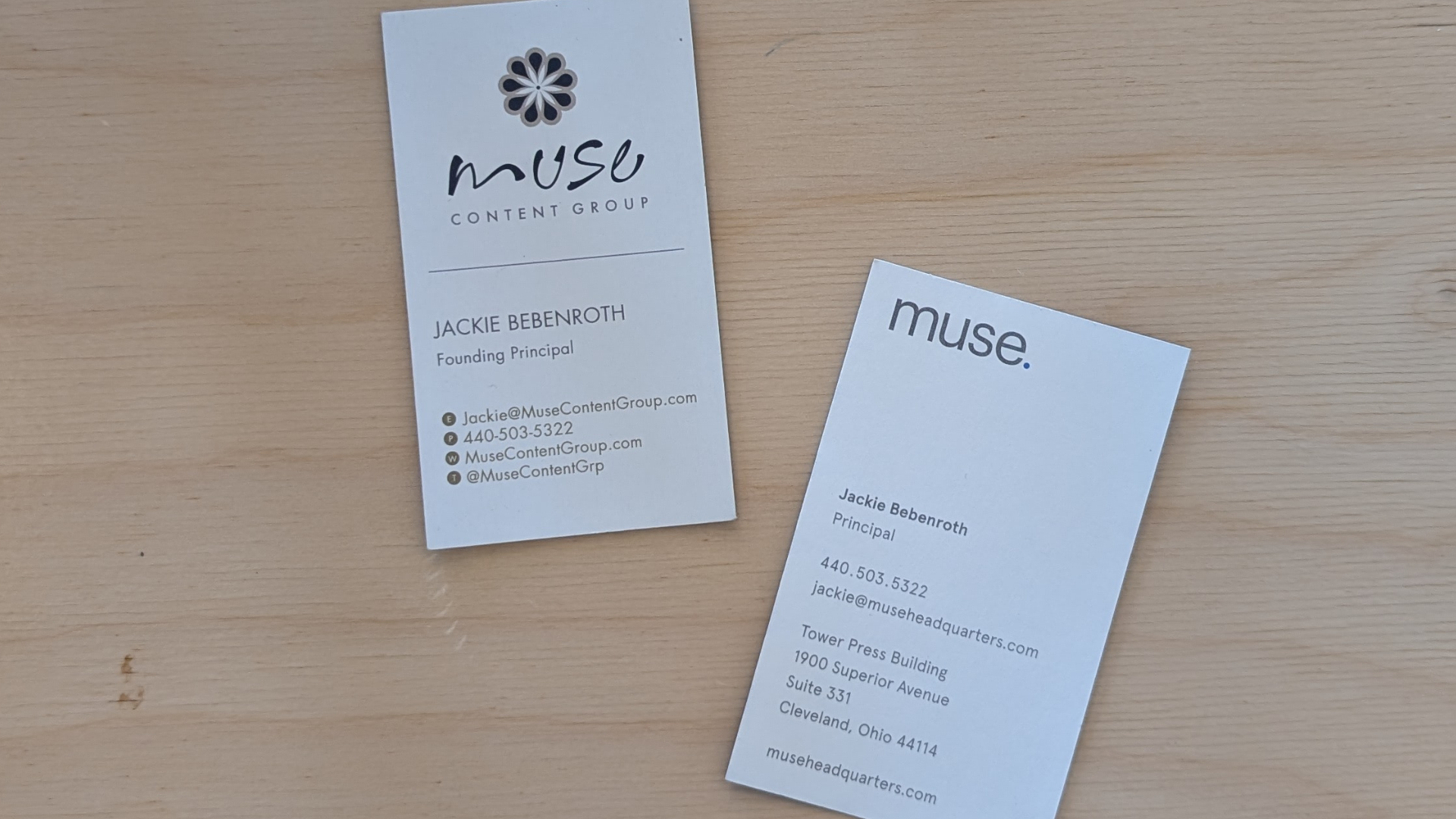
This move signaled an opportunity to transform the business from tactical writing services to brand and content strategy. The name "Muse Content Group" no longer represented what we offered, so we dropped "Content Group" entirely and became known simply as Muse. That required a new logo, a new website, and a new URL. It was a complete identity change that signaled where the business was heading.
Refresh: A visible update to the brand without starting over.
A brand refresh updates how a brand looks and sounds while preserving its core identity. This is often the right move when a business has evolved, but the brand has lagged behind, seeming outdated. For business owners, it often feels as though they’re wearing clothes that no longer fit. Depending on the growth trajectory, this can happen every 5-7 years.
A refresh is a makeover of sorts and typically includes:
- A logo update or redesign
- Refined color palette and typography
- A new tagline, theme line, or name modifier
- Exploration and expansion of brand architecture (parent/sub-brands)
- A new or significantly updated website

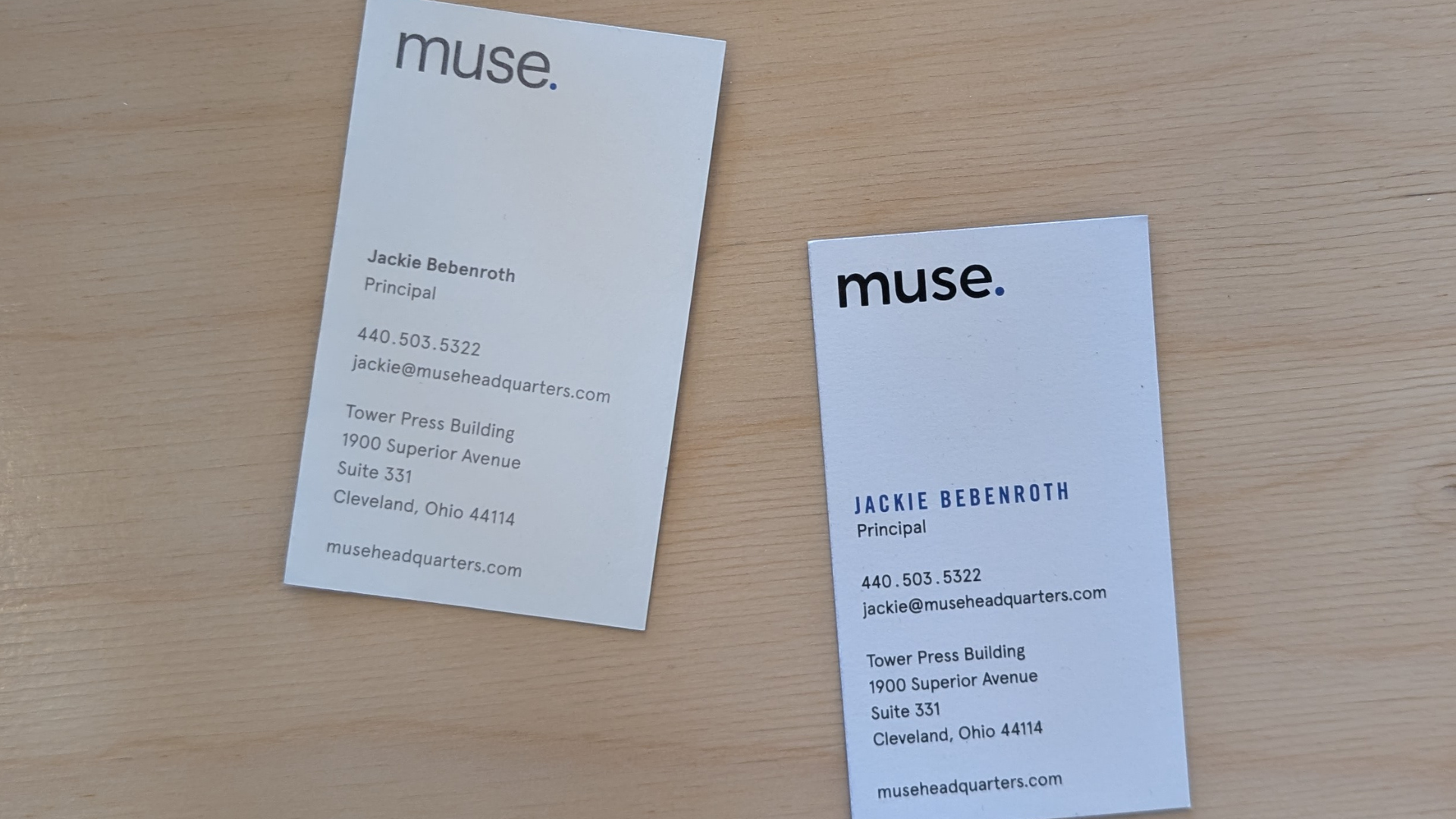
A few years after the Muse rebrand, our creative director observed that the brand felt too delicate and passive for the bold, creative work we were producing. We needed more presence, more confidence. So we refreshed the logo and visual system to embody a Creator archetype.
The changes were intentional but not dramatic. We retained the same name and URL. Many clients did not consciously register the shift, and that was exactly the point. The brand finally matched the personality of our culture and our confident approach to the work.
Refinement: A brand "glow up" that strengthens what already works.
Refinement is the most subtle form of brand evolution, and often the most underleveraged approach in brand strategy. It doesn't change who you are. It sharpens how you show up.
A refinement typically includes:
- Subtle logo adjustments
- Exploration and selection of a new brand archetype
- Expanded visual elements such as patterns, layouts, or iconography
- Investment in fresh brand photography and videos
- Refined brand guidelines for more consistent application
This year, Muse is undertaking a refinement. Our website has been expanded and added to with a spotlight on creative and communications, but it no longer reflects the specialized focus we bring to brand strategy today. We're narrowing our service set to focus on business and personal branding, and we need to refine our visual identity to support that evolution.
We’ll be introducing new visual elements and building a new website over the next year. The process will be slow and thoughtful, magnifying brand strengths to build on the equity we’ve earned over time.
Refinement is often the right choice when the brand foundation is solid, but the execution feels safe, outdated, or inconsistent. It's a smart investment for established businesses that want to elevate perception without disrupting recognition.

Choosing the Right Level of Change
Brand change can be a significant investment and making the wrong decision can cost more than money. It can erode trust with the people who already know your brand.
We often see companies pursue a full rebrand when a refinement would have solved the real problem. Others endlessly tweak visuals when what they actually need is a complete refresh.
The goal is not change for the sake of change; it’s expression that’s aligned with your current stage of business.
If you haven't taken a thoughtful look at your brand in five years or more, it may be time to assess what level of evolution makes sense. With the right perspective, brand change becomes a confident advantage rather than a risky gamble.

About the Author

Jackie Bebenroth
Jackie Bebenroth is Founder and Chief Brand Advisor of Muse. She works alongside leading brands and executives to develop strategic positioning and messaging strategies that set the stage for long-term success. Her work, from local restaurant branding to six-figure global initiatives, has flown her around the country to speak on the art of content marketing. Jackie has earned a number of accolades, most notably a SXSW Interactive finalist award, the American Advertising Federation’s 40 under 40 award and Content Marketing Institute’s Content Marketing Leader of the Year.
More Good Reads

Why a Brand Redesign May Not Solve Your Brand Strategy Problem
A new logo doesn’t fix an unclear strategy. Muse and Fizz Creative discuss how brand strategy supports meaningful visual branding.

Turning Our Advice Inward: The Muse Brand Refinement, Part 1
A look inside what happens when a brand strategy firm refines its own identity.